
• Nosotros
  • Servicios
  • Contacto
  • Membresias
  • Colaboradores
lunes, septiembre 14, 2026
No hay resultados
Ver todos los resultados
Revista
Advertisement
  • Revista
    • Bienal 2026
    • Internacional
    • Actualidad
    • Artículos
    • Opinión
    • Crónicas
    • Entrevistas
    • Firmas
      • A cuerda pelá
      • De Guitarreras Maneras
      • Con una copla de más
      • Desde dentro
      • Estela Flamenca
      • Los Elegidos
      • Sala de Flamencas
      • Una ventana al cante
      • Firmas invitadas
    • Investigaciones
    • Archivo
  • Bienal2026
  • Internacional
  • Actualidad
  • Entrevistas
  • Opinión
  • Crónicas
  • Firmas
  • Archivo
  • Login
  • Revista
    • Bienal 2026
    • Internacional
    • Actualidad
    • Artículos
    • Opinión
    • Crónicas
    • Entrevistas
    • Firmas
      • A cuerda pelá
      • De Guitarreras Maneras
      • Con una copla de más
      • Desde dentro
      • Estela Flamenca
      • Los Elegidos
      • Sala de Flamencas
      • Una ventana al cante
      • Firmas invitadas
    • Investigaciones
    • Archivo
  • Bienal2026
  • Internacional
  • Actualidad
  • Entrevistas
  • Opinión
  • Crónicas
  • Firmas
  • Archivo
No hay resultados
Ver todos los resultados
Revista
No hay resultados
Ver todos los resultados
  • Revista
  • Bienal
  • Internacional
  • Actualidad
  • Entrevistas
  • Opinión
  • Crónicas
  • Firmas
  • Archivo

K. Meira Goldberg: «Flamenco in general is becoming more popular in the States, both dance and guitar»

ExpoFlamenco por ExpoFlamenco
20 enero 2024
Tiempo de lectura: 4 mins
274
A A
0
539
Compartir
1.5k
Vistas
Share on Facebook
Share on Twitter
Comparte por correo
Comparte en Whatsapp
Comparte con ChatGPT
Comparte con Perplexity

In the month of April 1973, a new piece of music began to circulate. It soon became popular in Europe, the Western world, and beyond. Entre dos Aguas it was called, and not even Paco de Lucía could understand the impact of that rumba of his that opened the gates to a new flamenco era, and an unstoppable revolution that continues to follow its path 50 years later. The international audience keeps growing, most of Paco’s followers hadn’t even been born when Entre dos aguas was playing on every radio station in the country, at all the fairs… That instrumental piece, not by any means the best of Paco, captivated us all and opened a new chapter in the genre.

ArtículosRelacionados

Don Antonio Chacón.

De cómo la música tradicional se disolvió en el flamenco

3 abril 2025
Reyes Carrasco y Rubén Lara. Peña La Platería, Granada. 29 Marzo 2025. Foto: Carlos Fernández - ExtampasFlamencas.com

Juventud radiante de Reyes Carrasco

31 marzo 2025
Recital de Bonela Hijo. Peña La Bambera, Sevilla. 22 marzo 2025. Foto: Kiko Valle

Bonela hijo: el cante con personalidad

24 marzo 2025


On March 7, 2024, the Foundation for Iberian Music at the Graduate Center of the City University of New York, in collaboration with the Flamenco Festival New York City, will present an international symposium dedicated to exploring the indelible influence of the Americas on Paco de Lucía and, in turn, his impact on Hispanic music and performers. The participation of Rafael Riqueni has been confirmed, among other musicians and scholars such as John Moore and Peter Manuel, whose book Flamenco Music: History, Forms, Culture has recently been published. Publication of the symposium proceedings in an anthology is planned.


The title of the iconic piece Entre dos Aguas has long been a subject of debate. However, I recall a radio interview with Paco in the summer of 1974 where he was asked about its meaning. He explained that it referred to the cultural blending represented by the meeting of the waters of the Mediterranean Sea and the Atlantic Ocean, which converge in Algeciras, the birthplace of our genius Lucía.


Paco often spoke of his commitment to aiding the birth of new flamenco forms: «The guitar is changing, and I have an obligation to the people who follow me, to open up new territories. Flamenco must be allowed to sound the same, but with a new vocabulary.”


And he has certainly fulfilled that commitment. Which is the reason we’re discussing his enormous contribution. In the 20th century, the importance of Arab culture in flamenco was considered a given. Now, for a few decades, importance has been attributed to the derived Hispanic, Latin American, Caribbean, etc. cultures. That’s how what we now call fusion or world music emerged, a blend of new flavors giving birth to sensations with their own identity.
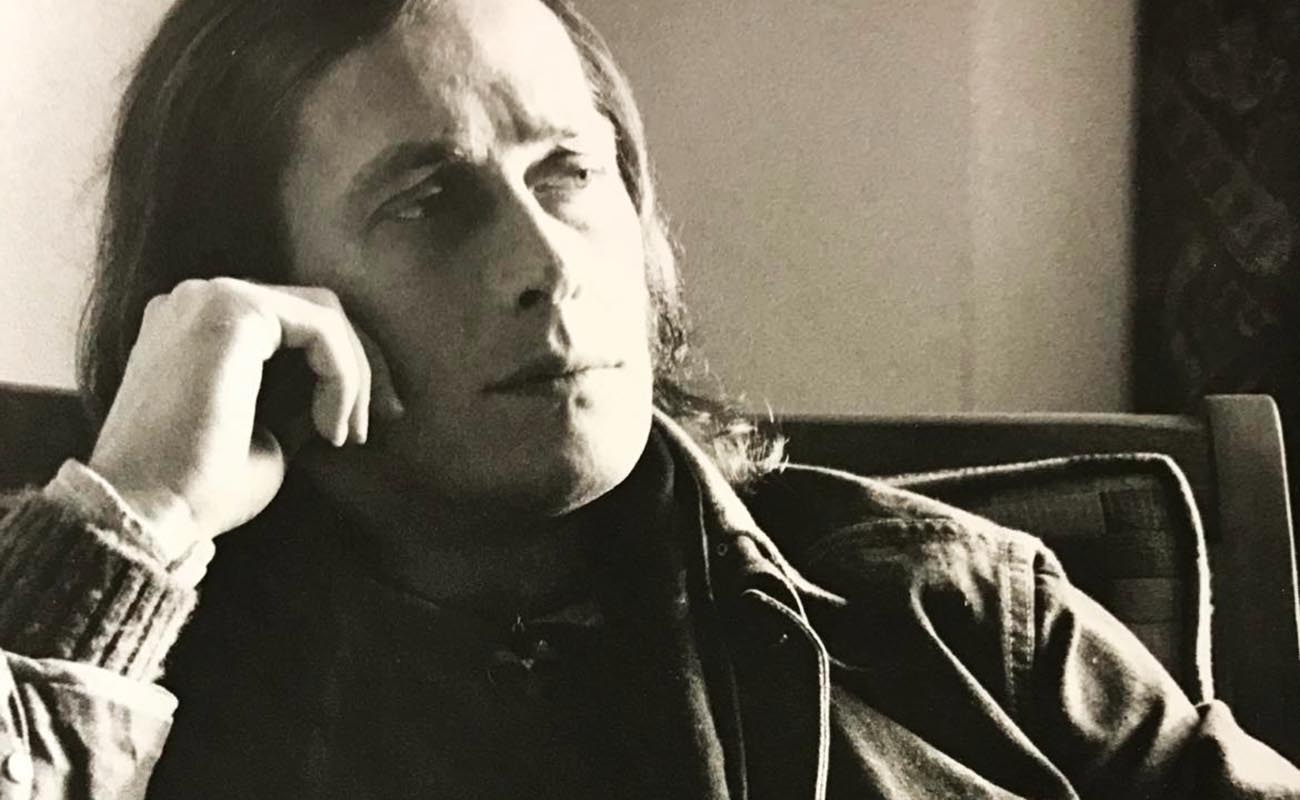


Paco de Lucía. Photo: René Heredia


What follows is a brief interview with K. Meira Goldberg from the Foundation for Iberian Music, which is organizing the symposium:


Meira, does the average American know who Paco de Lucía was? 

Unfortunately, I highly doubt that the average person in the U.S. knows who Paco, or Carlos Montoya, or Carmen Amaya, or Lola Flores, or Sabicas was. But perhaps if there’s one on this list, it’s Paco.


Do you think Paco’s fame has enhanced flamenco appreciation in the United States?

Absolutely! Very much so.


Does the typical non-Spaniard prefer flamenco dance to singing or guitar? 

The typical non-Spaniard doesn’t really know what to make of the singing, and doesn’t like the sound of it. But I think flamenco in general is getting more popular in the States, and that means especially both dance and guitar. 


Will the city’s Hispanic population attend the Festival and symposium? 

I think some Hispanic people will attend the Festival, of course, but its main audience is flamencos and New York’s general theater-going population. Our symposium is free and open to the public, and I think it will draw mainly flamenco followers, as well as musicologists and ethnomusicologists.


There used to be a good number of flamenco dance schools in New York City. Has that changed? 

After Fazil’s rehearsal studio closed in 2008, flamencos scattered throughout the city. Flamenco Vivo‘s classes and studios in Times Square are thriving. Sonia Olla and Ismael Fernández have opened up their own studios in the same building. Xianix Barrera has a space in East Harlem and has many students. Jorge Navarro has studios downtown, and Soledad Barrios has a space on the Upper West Side. Post-Covid there are a bunch of online classes: Alfonso Cid teaches singing, and Guillé Guillen has a marvelous site covering all the basics. 


How long has this symposium been in the planning? Does the project receive support from the New York City municipal government? 

We’ve been planning this symposium for a couple of months now. We’re still finalizing the program, but we’re thrilled to have the participation of several prominent scholars and also the maestro Rafael Riqueni. We also hope to bring in the voices of several people who knew Paco: Pedrito Cortés, René Heredia, and perhaps you Estela could record a short reminiscence on video?


The event is supported by the Flamenco Festival and by the Foundation for Iberian Music at The Graduate Center of the City University of New York.


ExpoFlamenco

ExpoFlamenco

Portal global de arte flamenco. El conocimiento y la pasión. La jondura y la pena. El pellizco y la fiesta. Patrimonio Cultural de la Humanidad.

Artículos Relacionados

Miguel Funi, en Las Cabezas de San Juan, 2001. Foto: Estela Zatania
Firmas

Acrobacia jonda

por Estela Zatania
10 septiembre 2026
Antecedentes y consecuentes del fandango del Albaicín / ExpoMúsica #13 con Faustino Núñez
Firmas

Antecedentes y consecuentes del fandango del Albaicín / ExpoMúsica #13 con Faustino Núñez

por Faustino Núñez
6 septiembre 2026
Concurso Nacional de Cante Jondo Antonio Mairena. Mairena del Alcor, Sevilla. 5 sep 2026. Foto: Kiko Valle / Festival Mairena
Firmas

Aurora Vargas ilumina Mairena del Alcor a pesar de la lluvia

por Juan Garrido
6 septiembre 2026
Antiguo pliego de tiranas y polos impreso en Valencia en la imprenta de Domingo y Mompié. Fuente: adarve5.blogspot
Firmas

Vida y muerte de la Tirana

por Faustino Núñez
3 septiembre 2026
José Mercé en Baluarte, Flamenco On Fire, cantando a Manuel Alejandro. Foto: FOF
Firmas

Flamenco On Fire: mucho más que balcones en el primer año sin Pepe Habichuela

por Juan Garrido
31 agosto 2026
De pie, el segundo por la izquierda, José Alfonso Sánchez seguido de Pepe Pinto. Sentados, por la izquierda, Andrés Molina Moles y Pastora Pavón.
Firmas

Editorial Renacimiento recupera las coplas flamencas de José Alfonso Sánchez

por José Cenizo
31 agosto 2026
El ‘medio compás’ en las bulerías por soleá / ExpoMúsica #12 con Faustino Núñez
Firmas

El ‘medio compás’ en las bulerías por soleá / ExpoMúsica #12 con Faustino Núñez

por Faustino Núñez
30 agosto 2026
Siguiente artículo

Ismael de la Rosa y Yerai Cortés, ¿para qué más?

Deja una respuesta Cancelar la respuesta

Tu dirección de correo electrónico no será publicada. Los campos obligatorios están marcados con *

Banner Manolo Sanlucar
Banner Bienal de Sevilla
Banner Lateral Academia
Banner Laterla FAN

La Voz del Flamenco en el Mundo. 

Sigue a ExpoFlamenco

Facebook X-twitter Instagram Youtube Whatsapp
  • Términos y condiciones
  • Política de privacidad
  • Política de cookies
  • Aviso Legal
  • Términos y condiciones
  • Política de privacidad
  • Política de cookies
  • Aviso Legal
  • Nosotros
  • Servicios
  • Contacto
  • Membresias
  • Colaboradores
  • Nosotros
  • Servicios
  • Contacto
  • Membresias
  • Colaboradores

© 2015 - 2026 expoflamenco . Todos los derechos reservados.

Ok

Recuperar la contraseña

Introduce tu nombre de usuario o dirección de correo electrónico para restablecer tu contraseña.

Log In
No hay resultados
Ver todos los resultados
  • Login
  • Espacio
  • Agenda
  • Academia
  • Comunidad
  • Podcast
  • TV
  • Shop

© 2015- 2026 ExpoFlamenco
La Voz de Flamenco en el mundo.